A blue icon since 1775 – Royal Copenhagen’s first tableware
Blue Fluted (Musselmalet) is the oldest pattern – and at the same time the very first porcelain tableware from Royal Copenhagen. The service was launched in 1775 and has been produced ever since. It is quite impressive to think that today, more than 200 years later, it is still one of the most popular coffee and dinner services and a service found in countless Danish homes.
For some, it is an heirloom passed down through generations, for others something collected piece by piece over time. Either way, Blue Fluted is a service that keeps appearing on the table – both for everyday use and special occasions.
The distinctive pattern and the classic shapes
Royal Copenhagen Blue Fluted is not recognised only by its blue colour, but by the Blue Fluted pattern itself with its flowing lines, small floral details and hand-painted expression. Each piece is painted by hand, which means there will always be slight variations in brush strokes and shades – this is part of the charm and what gives the service life. Blue Fluted is also an underglaze service, meaning the decoration is protected beneath the glaze. This makes it durable and suitable for everyday use. Cups, plates and bowls can therefore safely go in the dishwasher and be used for both hot and cold dishes – without losing their appearance.
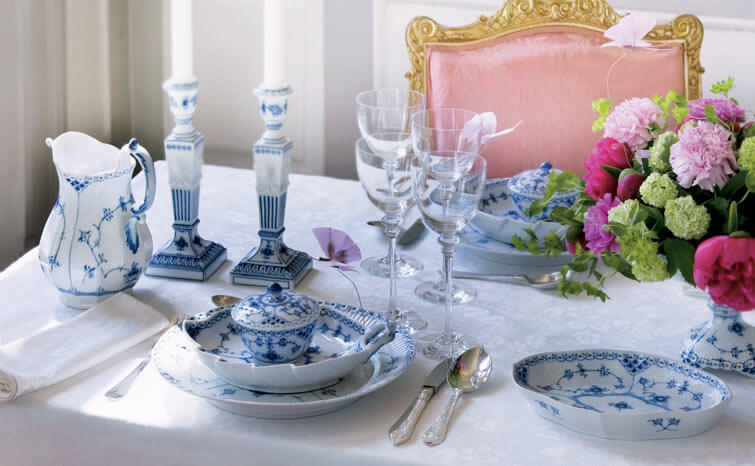
The first version was Blue Fluted Plain (Musselmalet Riflet) from 1775, recognised by the characteristic fluted ridges in the porcelain. Later came Blue Fluted Half Lace (Musselmalet Halvblonde) and Blue Fluted Full Lace (Musselmalet Helblonde), where the shapes became more decorative with relief edges and pierced details. It is precisely the combination of the pattern and the shapes – Plain, Half Lace and Full Lace – that makes Blue Fluted easy to recognise.
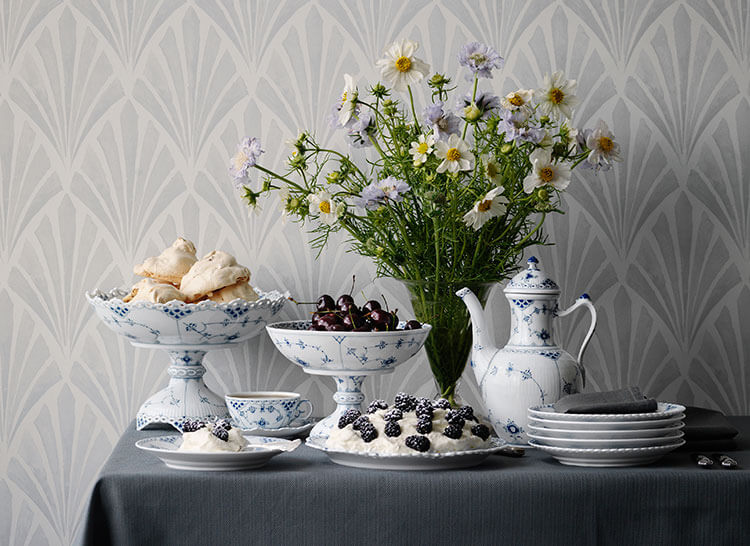
The history of Blue Fluted – from 1775 to today
Blue Fluted Plain was introduced in 1775 as Royal Copenhagen’s very first service. In 1885, Arnold Krog was appointed artistic director and began reworking the original pattern. In the years before, the decoration had gradually become coarser and less detailed, partly due to efforts to reduce production time. Arnold Krog’s work restored the precision and lightness that many associate with Blue Fluted today.
It was also during this period that Blue Fluted Half Lace and Blue Fluted Full Lace emerged as developments of the original fluted service. Since its launch, Blue Fluted has been produced continuously and is today known worldwide as Blue Fluted.
Three classic versions of Blue Fluted
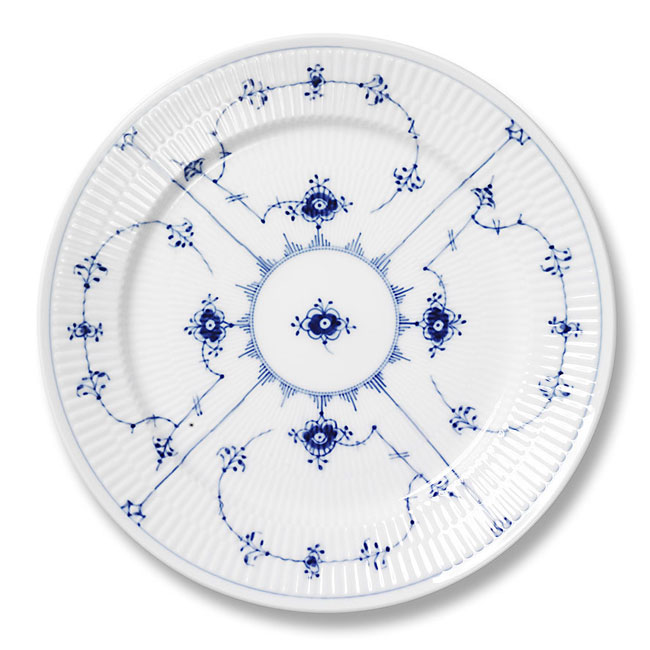
Blue Fluted Plain
Recognised by the vertical fluted ridges in the porcelain and a smooth edge without lace details.
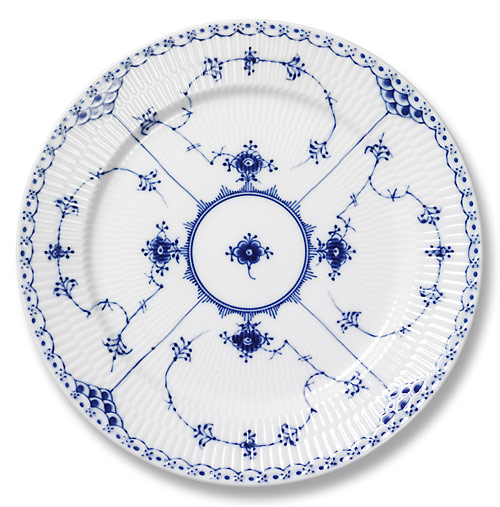
Blue Fluted Half Lace
Features a decorative relief edge with soft curves – but without piercings.
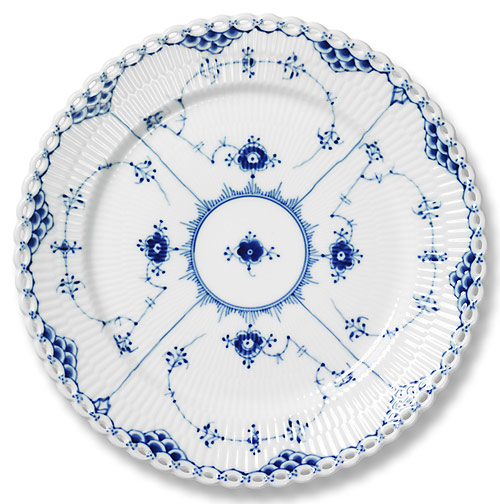
Blue Fluted Full Lace
Recognised by the pierced lace edge with small holes and very fine details.
A service with countless pieces
Throughout the more than 200 years Blue Fluted has been in production, an incredible number of pieces have been made – and many are no longer produced today. This also means there is a large and vibrant market for older and antique pieces, where shapes no longer manufactured can still be found.
Today, Blue Fluted mainly consists of espresso cups, coffee cups, mugs, breakfast cups, deep plates, lunch plates, dinner plates, serving platters, sauce boats, tureens, salad bowls, cake stands, coffee pots, teapots, sugar bowls and creamers.
In the past, many more variations of creamers, sugar bowls, coffee pots, teapots, cake stands and serving platters were produced. There have also been coffee trays, pedestal cake stands, vases, candlesticks, fruit bowls, cigarette holders, ashtrays, dessert cups, mustard jars, egg cups, candle collars and knife rests – as well as particularly elaborate plates and majestic full lace candlesticks. These are exactly the pieces many search for today to make their service truly personal.
Classic meets modern – Blue Fluted Mega
In the year 2000, Blue Fluted received a new interpretation when Karen Kjædgaard-Larsen designed Blue Fluted Mega, also commonly referred to as Mega Mussel. Here, the classic flowers were enlarged and given a more modern expression. Mega is available among others in blue and black and is often combined with the traditional versions. Many choose this mix because it gives the table a contemporary twist without completely letting go of tradition.
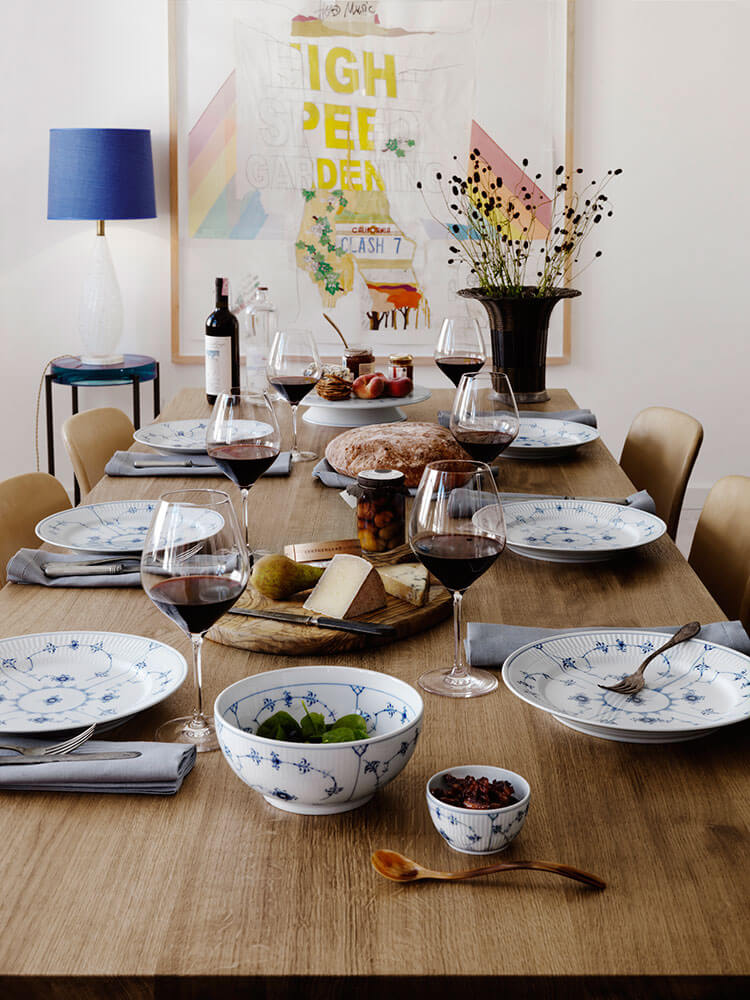
Blue Fluted today – from everyday use to celebrations
Today, many choose to use Blue Fluted both for everyday meals and special occasions. Some stick to one version, while others mix Plain, Half Lace and Full Lace or combine them with Mega. Some even use classic pieces to create something new, such as tiered stands. The service fits equally well in classic and modern interiors and is often seen as a tableware you continue building throughout life.
When Blue Fluted gets a new life
Older Blue Fluted pieces are found in many homes, and even single cups or plates can hold both practical and collector’s value. Some choose to sell or exchange pieces, while others search for the exact bowl or cake plate missing from their collection. We are happy to purchase Blue Fluted dinner services if you are considering letting your pieces move on.
Facts about Blue Fluted:
Who produced Blue Fluted?
- Blue Fluted dinner and coffee services were produced by Royal Copenhagen.
What is Blue Fluted Plain, Half Lace and Full Lace?
- These are three classic versions of Blue Fluted: Plain is recognised by fluted ridges, Half Lace has a decorative relief edge, and Full Lace features a pierced lace edge.
How long has Blue Fluted been produced?
- Blue Fluted was launched in 1775 and has been produced continuously ever since.
What is Blue Fluted Mega (Mega Mussel)?
- In 2000, Blue Fluted received a modern interpretation when Karen Kjædgaard-Larsen designed Blue Fluted Mega, also known as Mega Mussel. The classic flowers were enlarged and given a contemporary look. Mega is available in blue and black and is often combined with the traditional versions.
Can Blue Fluted go in the dishwasher?
- Yes. Blue Fluted is an underglaze service and is dishwasher safe.
Why is it called Blue Fluted?
- The name originates from the German word Muschel, meaning shell, and refers to the fluted shape of the porcelain – not the floral decoration.
See also:




 We are e-approved