Aluminia Christmas plates with colorful motifs in faience
Aluminia Christmas plates are something quite different from the blue-and-white Christmas plates many know from Royal Copenhagen and Bing & Groendahl. Here you get faience instead with colors, flowers, angels, churches, and other decorative details that change throughout the series.
Aluminia released both large and small Christmas plates. The first came in 1904, and through the years, both motifs, colors, and artists change. This makes it exciting to see several plates together – but also easy to find a single edition that stands out.
Large and small Aluminia Christmas plates
The large Aluminia Christmas plates were produced from 1904 to 1930, while the small ones continued until 1938.
The small plates measure 16 cm in diameter, making them easy to collect several on the wall. The large plates vary in size from year to year and naturally take up more space when hung alone or together with the smaller models.
Both series are made of faience, and it is precisely the material that gives the plates their distinctive colors and expression.
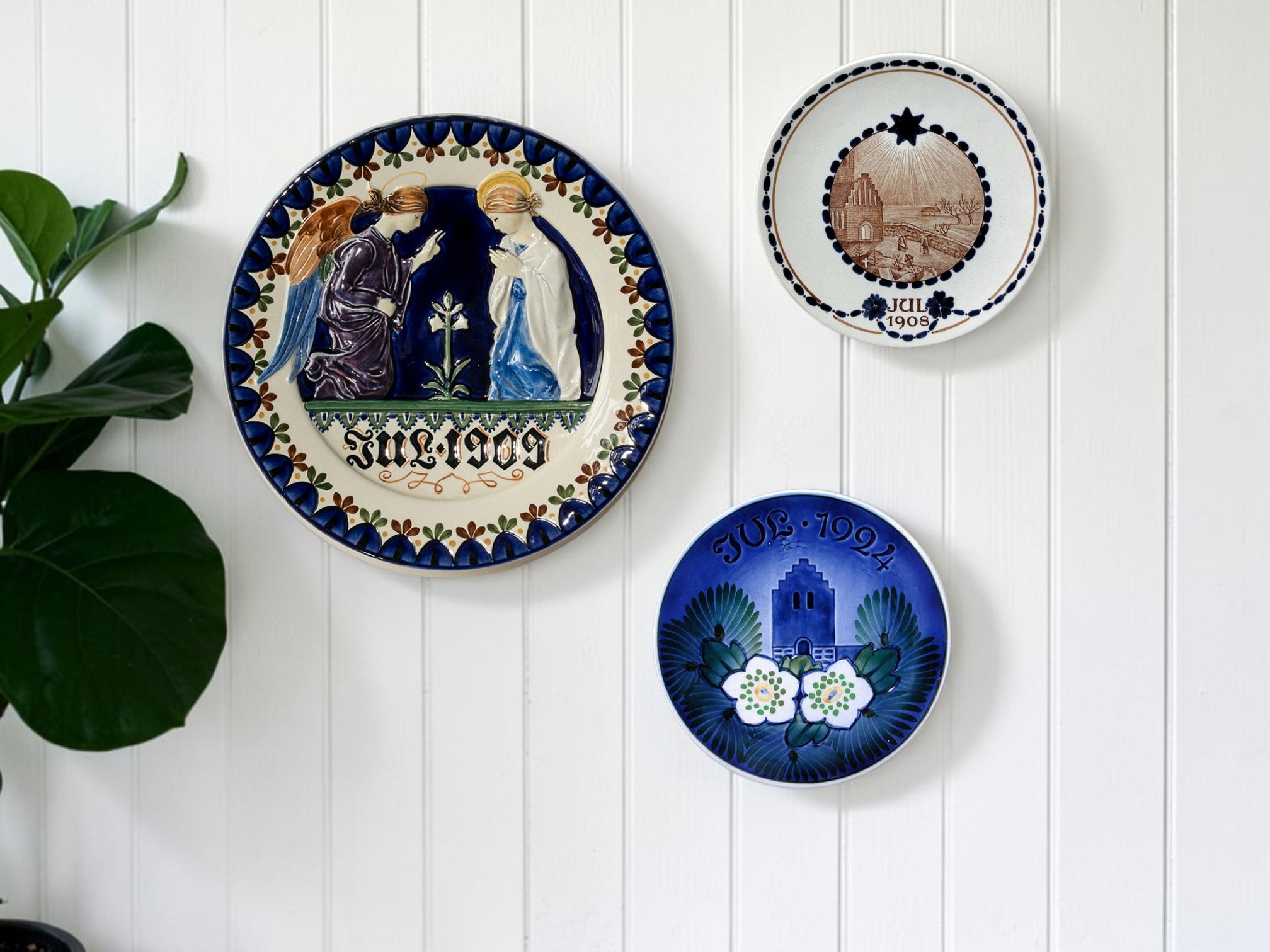
Flowers, angels, and other Christmas motifs
The motifs on Aluminia Christmas plates change clearly over the years. On many of the early small plates, flowers dominate, often in yellow, green, brown, and reddish shades against a dark blue background.
Later, angels, bells, and churches are included in the motifs. Some plates are simpler, while others have many small details or relief decoration.
It is therefore not only the year that distinguishes the plates from each other. The expression can vary greatly from one period to another, and that is a big part of the charm of the series.
Several artists left their mark on the series
Most of the early small Aluminia Christmas plates were designed by Christian Joachim Petersen. His plates are especially known for the flowers and the strong colors against the deep blue background.
In 1919, Heiberg took over the decoration. During the first years, angels became an important part of the motifs, while flowers again gained more space from 1921.
From 1924 to 1930, Niels Thorsson was behind the small Christmas plates. He continued with the flowers but also added, among other things, bells and churches.
Hans Henrik Hansen took over in 1931 and designed the plates until the series ended in 1938. Here, the angels returned, and on several of the later editions, the blue background is less intense than on the earlier plates.
Crazing is common on old faience
Many old Aluminia Christmas plates show fine crazing in the glaze. This is quite common on older faience and something often encountered on plates from this period.
Crazing is small lines in the glaze and is not the same as cracks, chips, or flakes. It is therefore important to distinguish between normal age-related crazing and actual damage or defects on the plate.
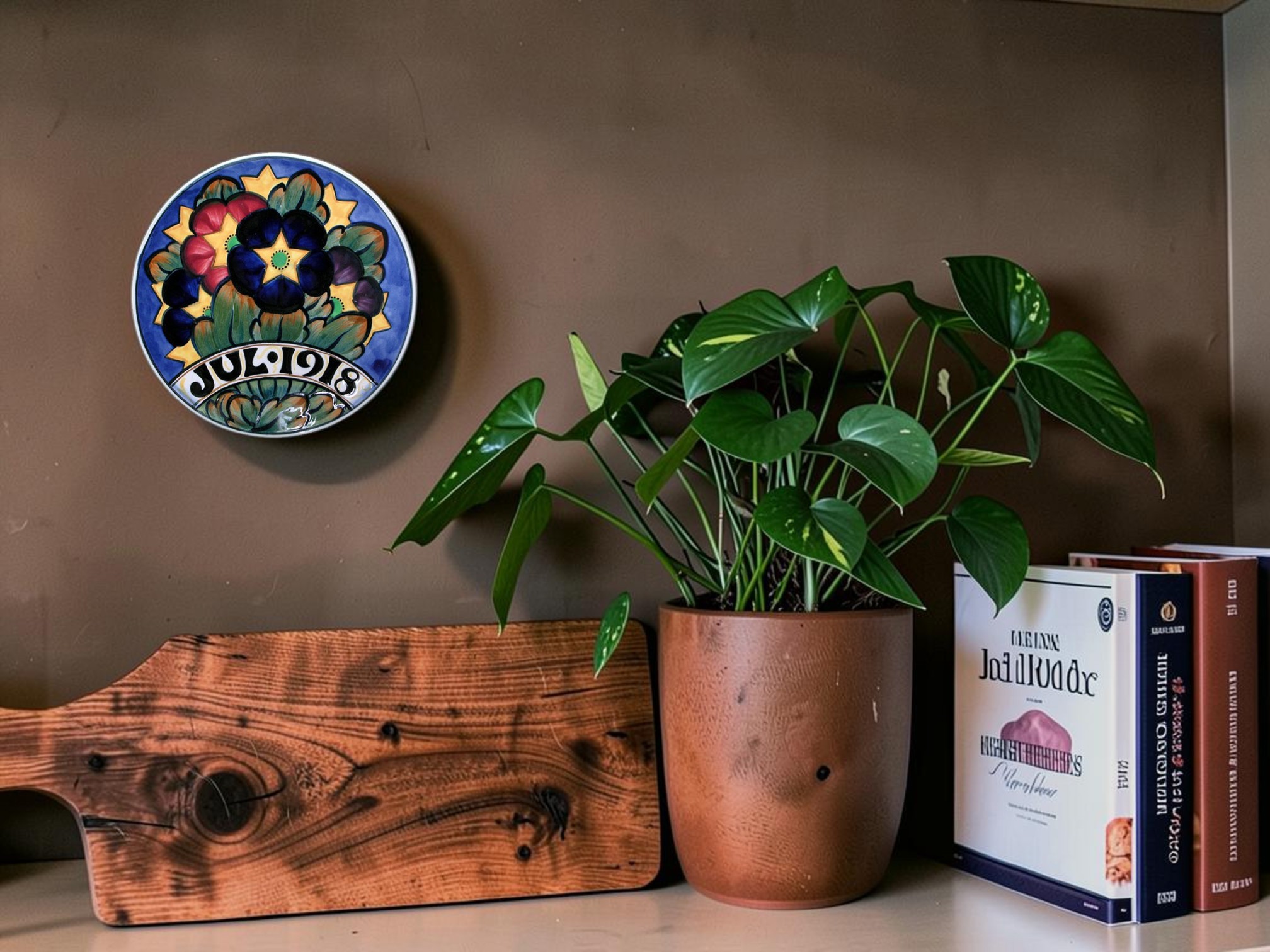
Use Aluminia Christmas plates on the wall
Both large and small Christmas plates have two holes on the back, so they are intended to be hung with plate hooks.
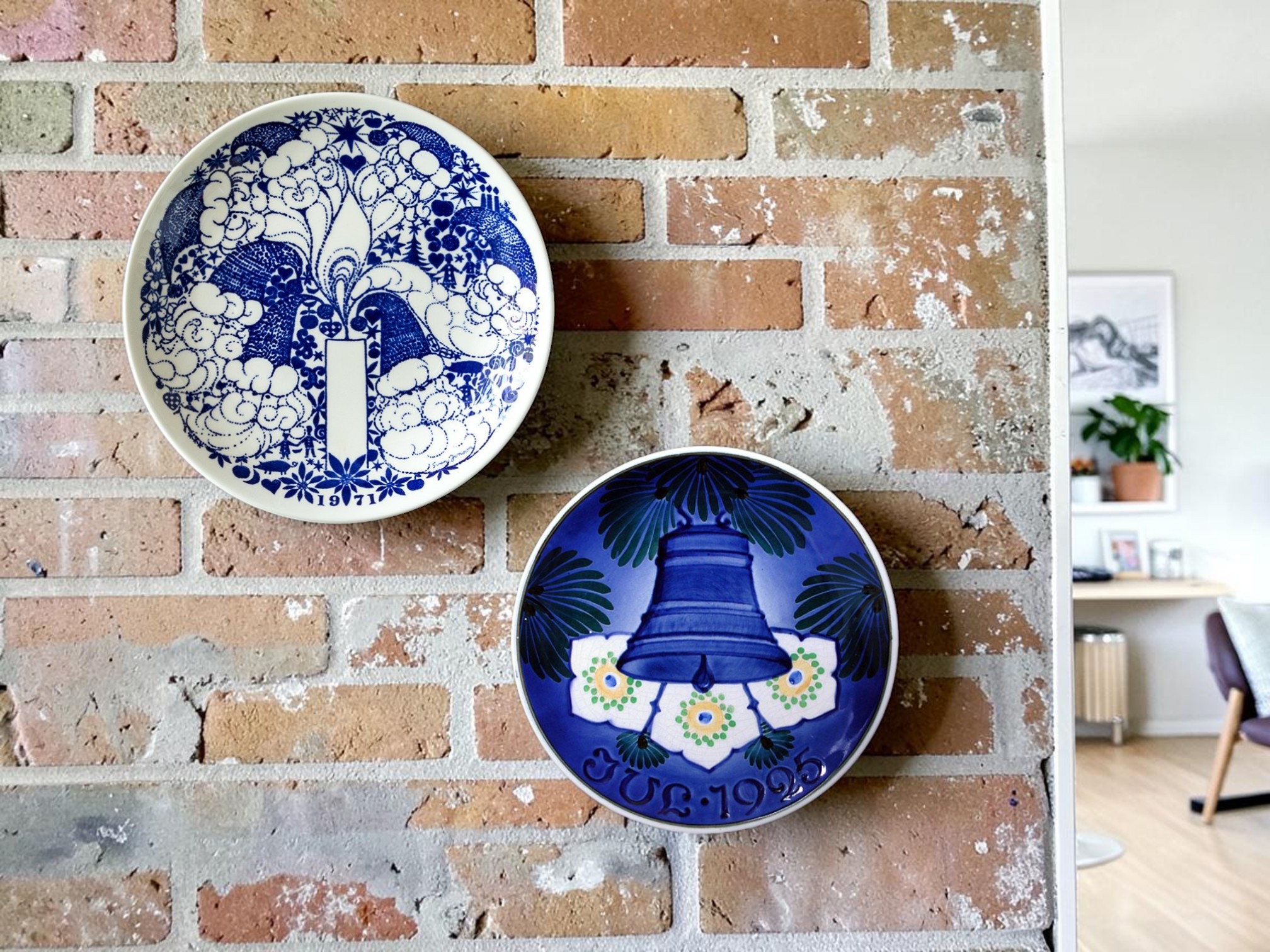
The small plates are good to collect several of in a group, while a larger plate can be allowed to stand out more alone. You can also mix sizes and let the different colors, flowers, and motifs play together.
This works especially well with Aluminia because the expression varies greatly from year to year. Colors and motifs change throughout the series, and therefore a collection on the wall can get a more lively expression. The plates also work well together with many other blue plates, so you can create a wall decoration that is uniquely yours.
See also:




 We are e-approved